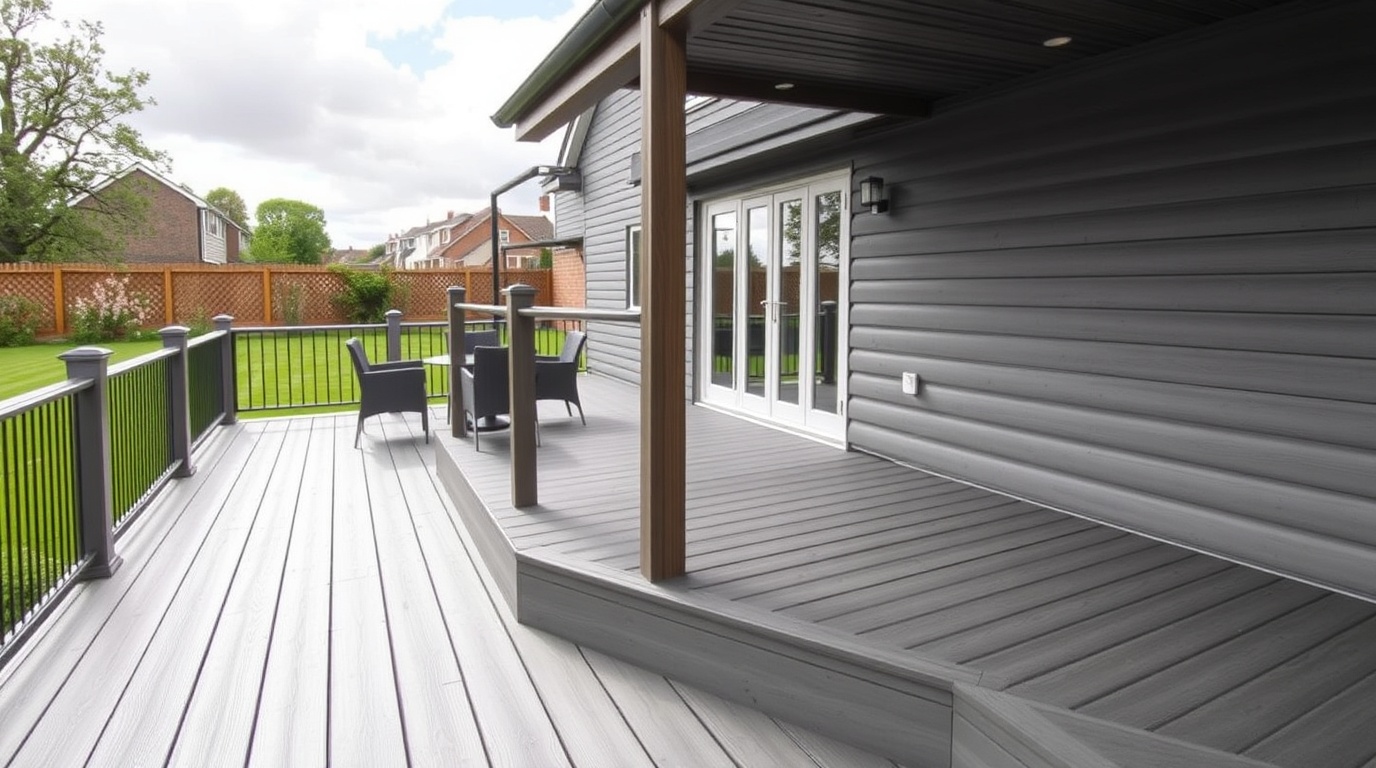
The short answer
In the UK, composite decking supplied and fitted typically costs somewhere around £150 to £250 per square metre, so a common 15 to 20 m2 composite deck often falls roughly between £2,500 and £5,000. Composite boards cost more than pressure-treated softwood up front because they are made from recycled wood fibres and plastic and are more expensive to manufacture. The trade-off is low maintenance: composite does not need staining, oiling or re-treating, only occasional cleaning. Price within composite varies by grade — uncapped boards are cheaper, while capped (co-extruded) boards with a protective outer shell cost more and resist fading and staining better. The subframe, groundworks and labour are similar to a timber deck.
Composite is usually the most expensive mainstream decking to buy, but the figure on the quote tells only half the story. The real comparison with timber is up-front cost against years of upkeep.
Composite decking cost at a glance
- Typical supply-and-fit rangeAround £150–£250 per m2
- Common 15–20 m2 deckRoughly £2,500–£5,000
- Made fromRecycled wood fibres and plastic
- Cheaper gradeUncapped boards
- Premium gradeCapped / co-extruded boards
What sits inside the composite price
A composite deck is built much like a timber one, so the price covers far more than the boards. The main lines are:
- Ground preparation: clearing and levelling the area, usually with a membrane and gravel beneath to keep the ground stable.
- Foundations and subframe: concrete pads or anchors, plus the joists and bearers that carry the boards. Composite boards are heavier than timber and some systems specify closer joist spacing, which can add a little frame material.
- The composite boards: the largest material cost, plus a cutting and wastage allowance.
- Hidden fixings: many composite systems use clips that sit in a groove on the board edge, giving a fastener-free surface. These add a little cost over plain screwing.
- Trims and finishing: matching fascia boards, corner trims and any steps or balustrade.
- Labour: setting out, building the frame and laying the boards.
Because the subframe and groundworks are similar to timber, the price difference between a composite and a softwood deck is largely in the boards themselves and, sometimes, slightly tighter joist spacing.
Capped versus uncapped, and grade
Composite is not a single product. The biggest price variable within composite is whether the board is capped. Uncapped boards are solid composite throughout and cost less, but they can fade more and are more prone to staining. Capped, or co-extruded, boards have a tough polymer shell bonded around the core that resists fading, scratching and stains, and they sit at the higher end of the range.
Boards also come hollow or solid. Hollow boards use less material and weigh less, so they tend to be cheaper; solid boards are heavier, feel more like timber underfoot and usually cost more. The figures below are indicative supply-and-fit ranges for guidance only.
| Composite type | Indicative cost per m2 (supplied and fitted) | Notes |
|---|---|---|
| Uncapped composite | Around £140–£190 | Lower cost, more prone to fade and staining |
| Capped composite (hollow) | Around £160–£220 | Protective shell, lighter board |
| Capped composite (solid) | Around £190–£250 | Heaviest, most timber-like, premium feel |
Indicative UK figures for guidance only; obtain itemised quotes for your site. Sources: Checkatrade and MyJobQuote 2026 decking cost guides.
Up-front cost versus lifetime cost
Comparing composite with timber on the day of purchase alone is misleading, because the two behave very differently over time. A softwood deck is cheaper to install but needs regular cleaning and re-treating to stay sound and presentable, and that work has a cost in materials and either your time or a tradesperson's. Composite costs more to install but avoids most of that ongoing work.
Over the life of the deck, the gap narrows. The factors that decide whether composite pays back are how long you keep the deck, how diligently you would maintain a timber one, and how much you value avoiding the upkeep. A few points worth weighing:
- Maintenance: composite needs only occasional washing, while timber needs periodic cleaning plus stain or oil every year or two.
- Lifespan: quality composite is often quoted to last decades, and many carry long warranties, whereas softwood depends heavily on upkeep to reach a similar age.
- Appearance over time: capped composite holds its colour, while timber silvers and weathers unless treated.
- Heat and slip: composite can feel warmer underfoot in strong sun; many boards have a textured, grip-improving surface.
None of this makes one material universally cheaper — softwood remains the lower up-front cost. The honest summary is that composite shifts spending from ongoing upkeep to the initial bill, which suits people who want to fit a deck and largely leave it alone.
Frequently asked questions
Why is composite decking more expensive than wood?
Composite boards are manufactured from recycled wood fibres and plastic, which costs more to produce than sawing softwood. Capped boards add a protective outer layer that raises the price further. The higher up-front cost is offset over time by much lower maintenance, since composite does not need staining or re-treating.
Is hollow or solid composite decking cheaper?
Hollow composite boards use less material and weigh less, so they usually cost less per square metre. Solid boards are heavier, feel more like real timber underfoot and are stronger, but they sit at the higher end of the composite price range.
Does composite decking cost more to install than timber?
The labour to fit composite is broadly similar to timber, but the subframe can cost a little more because some composite systems require closer joist spacing and the boards are heavier. The main price difference between the two is the cost of the boards themselves.
Sources & further reading
Figures on this page are typical UK ranges drawn from published sources and depend on your specific garden. They are guidance, not a quotation.