The short answer
For most gardens in England, decking is permitted development and needs no planning permission if it is no more than 300mm above ground level, together with other extensions it covers no more than 50% of the garden, and it does not extend forward of the principal elevation of the house. Decking above 300mm is treated as a raised platform and may need a planning application, and where any part is more than about 600mm above the ground, a balustrade or guardrail is required. The main exceptions are listed buildings, conservation areas, national parks and properties with an Article 4 direction, where you should check with your local planning authority first. Always confirm your own case before you build.
Two questions come up on every deck: do I need permission, and do I need a balustrade? For most low, ground-level decks the answers are 'no permission' and 'no rail'. The thresholds below are the ones that matter.
The rules in brief
- Up to 300mm highno permission (usual)
- Over 300mmraised platform — may need application
- Over ~600mmbalustrade / guardrail required
- Garden covermust stay under 50% with other builds
- Listed / conservation areacheck the local authority first
The height and garden rules
In England, garden decking is normally permitted development — no planning permission — provided it meets three conditions: it is no more than 300mm above the natural ground level; together with other extensions and outbuildings it covers no more than 50% of the garden; and it does not project beyond the principal (front) elevation of the house. Cross any of those thresholds — most commonly the 300mm height — and the deck is classed as a raised platform, which can require a planning application. Rules differ slightly in Scotland, Wales and Northern Ireland, so check the position where you live.
| Situation | Permission needed? |
|---|---|
| Deck up to 300mm high, under 50% of garden | No (permitted development) |
| Deck over 300mm above ground | Possibly — treated as a raised platform |
| Covers more than 50% of the garden | Yes — exceeds permitted development |
| Listed building / conservation area / Article 4 | Check local authority first |
General guidance for England — confirm your own case with your local planning authority. Source: Planning Portal.
Balustrades and safety
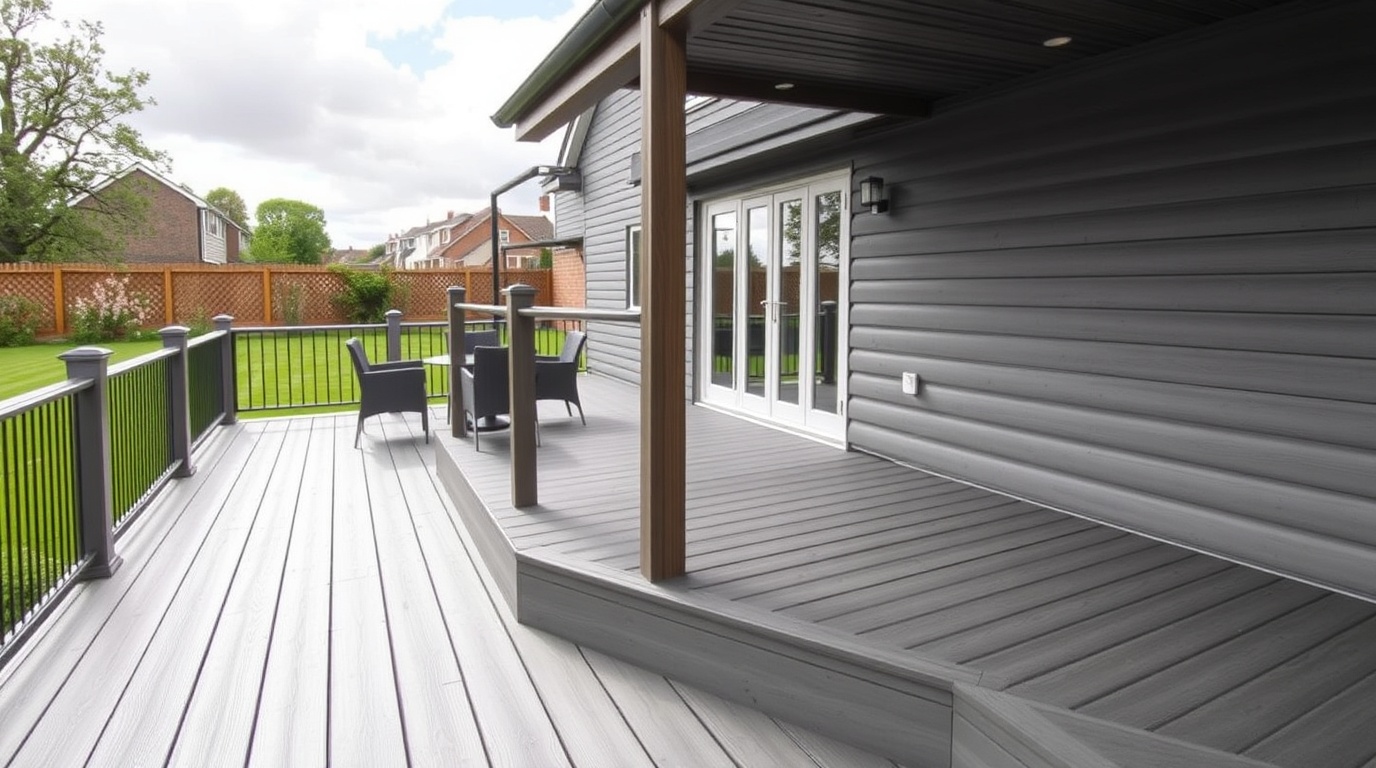
Separately from planning, there is a safety threshold: where a deck is raised so that any part is more than about 600mm above the ground, a balustrade or guardrail is normally required to prevent falls, and steps may need a handrail. A raised deck also brings building regulations into play for its structure. None of this is a reason to avoid a raised deck — it just means a competent installer should design the sub-frame, balustrade and steps to suit, and flag any planning check, rather than leaving it to chance.
Frequently asked questions
Do I need planning permission for decking in the UK?
For most gardens in England, no — decking up to 300mm above ground, covering under 50% of the garden and not in front of the house is permitted development. Decking over 300mm is a raised platform that may need an application, and listed buildings, conservation areas and Article 4 properties should be checked with the local authority first.
How high can decking be without planning permission?
Up to 300mm (about 12 inches) above the natural ground level in England, provided the other permitted development conditions are met. Above 300mm it is treated as a raised platform and may require a planning application.
When does decking need a balustrade?
Where any part of the deck is raised more than about 600mm above the ground, a balustrade or guardrail is normally required to prevent falls, and a raised deck may also bring building regulations into play for its structure.
Sources & further reading
Figures on this page are typical UK ranges drawn from published sources and depend on your specific garden. They are guidance, not a quotation.