The short answer
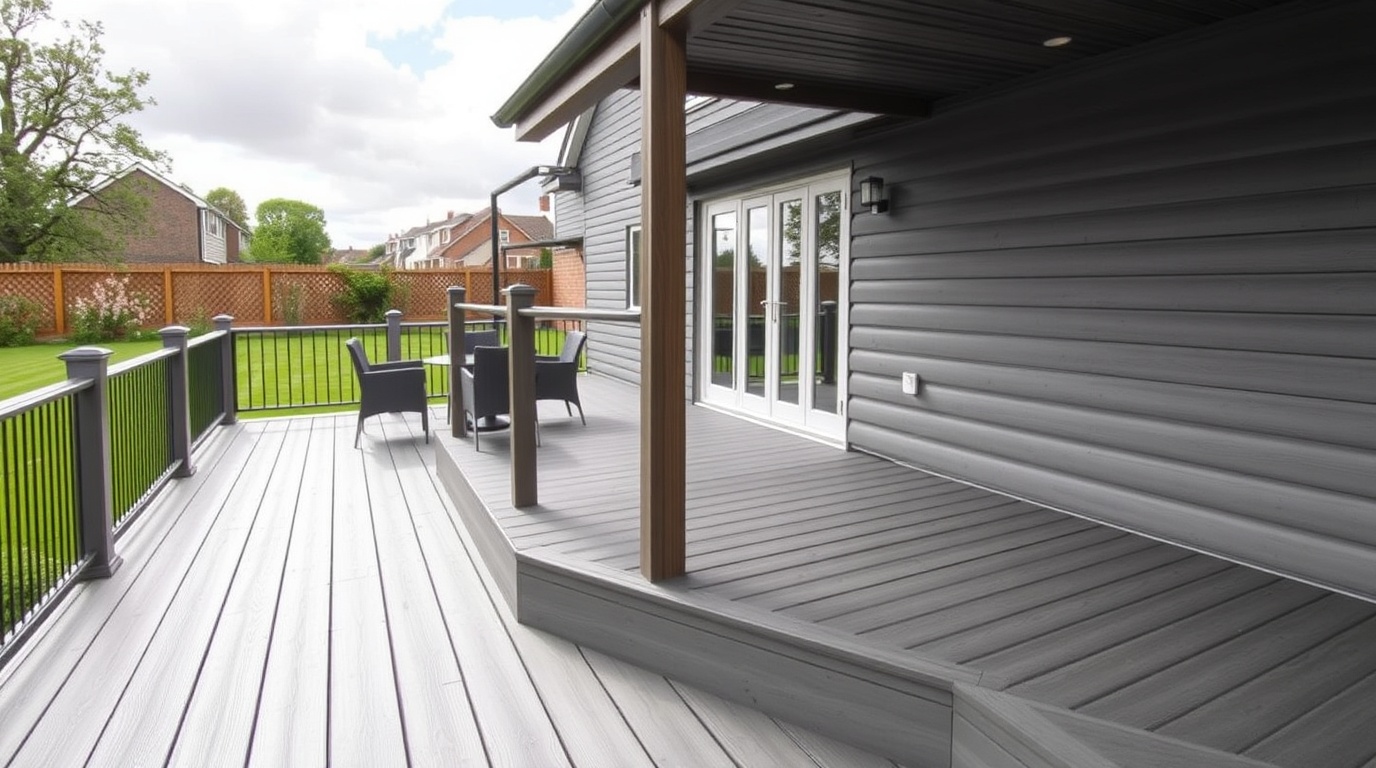
UK decking comes in a wide range of colours and finishes. Composite offers the most choice — popular shades include light and slate greys, tans and golden browns, deep coffee and chocolate browns, and charcoal/black, often multi-tonal to mimic real wood. Timber can be left to weather to a silver-grey or stained almost any colour, from natural cedar tones to dark walnut and even greys and greens. On finish, boards are commonly grooved (ridged, for grip) or smooth, with surfaces that are embossed woodgrain, brushed or sanded. Lighter colours show less heat build-up and dust; darker ones hide marks but warm up in sun. Always view samples outdoors before choosing.
Decking is no longer just brown timber — composite especially comes in many colours and surface finishes. This page runs through what's available and how to choose.
Popular colours
- Coolest, modernLight/slate grey
- Warm, naturalTan / golden brown
- Rich, traditionalCoffee / chocolate brown
- Bold, contemporaryCharcoal / black
- Timber, untreatedSilvers to grey
The colour range
Composite decking gives the broadest palette, and most ranges group into these families:
- Greys — from pale silver-grey through mid and slate greys; popular for modern, cool-toned gardens and pairs well with grey paving and rendered walls.
- Tans and light browns — golden, honey and oak-like tones for a warm, natural feel.
- Mid to dark browns — coffee, walnut and chocolate browns for a rich, traditional look.
- Charcoal and black — deep, contemporary shades that make a bold statement.
- Reddish / cedar tones — warmer red-browns echoing redwood or cedar.
Many composite boards are multi-tonal, with subtle colour variation along and across the board to imitate natural timber rather than a flat, uniform paint colour. Timber starts at its natural tone and can be stained to almost any of these colours, or left to silver.
The finish and surface texture
Separate from colour is the board's finish, which affects both looks and grip:
- Grooved — fine ridges running the length of the board; channels water and improves grip, a common composite finish.
- Smooth — a flat surface with no grooves; cleaner-looking but less grippy when wet, so often used on the reverse of reversible boards or in low-slip-risk areas.
- Embossed woodgrain — a moulded grain pattern that mimics sawn or brushed timber for a natural appearance.
- Brushed / sanded — a deliberately textured matte surface that holds grip and hides marks.
Some composite boards are reversible, with grooved on one face and smooth or a different grain on the other, giving two looks from one board. Timber finishes depend on the saw and any stain or oil applied — from a smooth planed surface to a grippier ridged profile.
Colours and finishes at a glance
The table summarises common colour families and finishes and where they suit.
| Choice | Look / effect | Good for |
|---|---|---|
| Light grey | Cool, modern | Contemporary gardens, grey paving |
| Tan / golden brown | Warm, natural | Traditional and cottage gardens |
| Dark brown | Rich, classic | Period homes, warm schemes |
| Charcoal / black | Bold, modern | Statement decks, contrast planting |
| Grooved finish | Ridged, grippy | Wet, shaded, general use |
| Smooth finish | Clean, flat | Low-slip-risk, sheltered areas |
Indicative guide for comparison only. Colours and finishes vary by brand and range. Source: composite decking manufacturer ranges.
How colour affects performance
Colour isn't only aesthetic — it changes how the deck behaves. Darker boards (charcoal, dark brown, black) absorb more heat and can get noticeably warm in direct summer sun, which matters in a south-facing garden, though they hide dirt, marks and the odd stain well. Lighter boards (greys, tans) stay cooler underfoot and show heat build-up less, but they reveal dust, leaf stains and muddy paw prints more readily, so may need cleaning a little more often to look their best. All composite colours settle slightly in tone during their first few months of UV exposure, then stay stable on quality capped boards; uncapped boards fade more over time. With timber, an untreated deck steadily greys unless oiled, so if you want to hold a colour you'll be re-staining periodically. Factor these practical effects in alongside the look you want.
Coordinating boards, edges and trims
A finished deck is rarely one colour and one board — the edges, fascias, steps and trims all show, and coordinating them lifts the result. Most composite ranges offer matching fascia and trim boards and corner or end caps in the same colours, which neaten exposed edges and close off hollow board ends; choosing these to match (or to contrast deliberately) makes the deck look intentional rather than improvised. Some people use a contrasting border — a darker frame around a lighter field, or vice versa — to frame the deck and break up a large area. Steps and risers benefit from the same thought, and are a natural place to add grippier or contrasting boards. It's also worth coordinating with fixings and any balustrade: hidden clips keep the surface clean and uniform, while a balustrade in a complementary tone or in metal/glass changes the whole feel. Thinking about the full palette — field, border, fascia, steps and rail — rather than just the main board colour is what turns a deck from a flat expanse into a considered part of the garden.
Choosing a colour and finish for your garden
A few pointers help narrow it down. Match the deck to the house and surroundings: greys suit modern rendered or grey-brick homes and grey paving, while warm browns and tans sit better with traditional brick, planting and cottage gardens. Consider sun and use — go lighter on a hot south-facing deck or where bare feet are common, and darker where you want to hide marks on a busy family deck. For finish, choose grooved or textured surfaces in shaded, damp or step areas for grip, and smooth where slip risk is low and you prefer a clean line. If you like flexibility, reversible boards or timber you can re-stain let you change the look later. As ever, samples viewed in your own light are the most reliable guide before you buy. One last tip is to choose a colour you can live with for the long term rather than one that simply matches this season's furniture — a deck is a fixed, multi-year surface, so a slightly more neutral, timeless tone tends to age better and adapts more easily as planting, paving and outdoor furniture change around it over the years.
Frequently asked questions
What is the most popular decking colour in the UK?
Grey tones — especially light and slate greys — have become very popular for modern UK gardens, as they suit contemporary homes and grey paving. Warm browns and tans remain popular for traditional gardens. There's no single right answer; the best colour is the one that suits your house, surroundings and how the deck will be used.
Do dark decking boards get hotter than light ones?
Yes. Darker boards such as charcoal and dark brown absorb more heat and can feel noticeably warmer in direct summer sun than light greys and tans, which matters most in a south-facing garden or where bare feet are common. Lighter colours stay cooler but tend to show dust and marks more.
What's the difference between grooved and smooth decking?
Grooved boards have fine ridges that channel water and improve grip, making them safer in wet or shaded areas, while smooth boards have a flat surface that looks cleaner but offers less traction when wet. Some composite boards are reversible, with a grooved face and a smooth face so you can choose either look.
Sources & further reading
Figures on this page are typical UK ranges drawn from published sources and depend on your specific garden. They are guidance, not a quotation.