The short answer
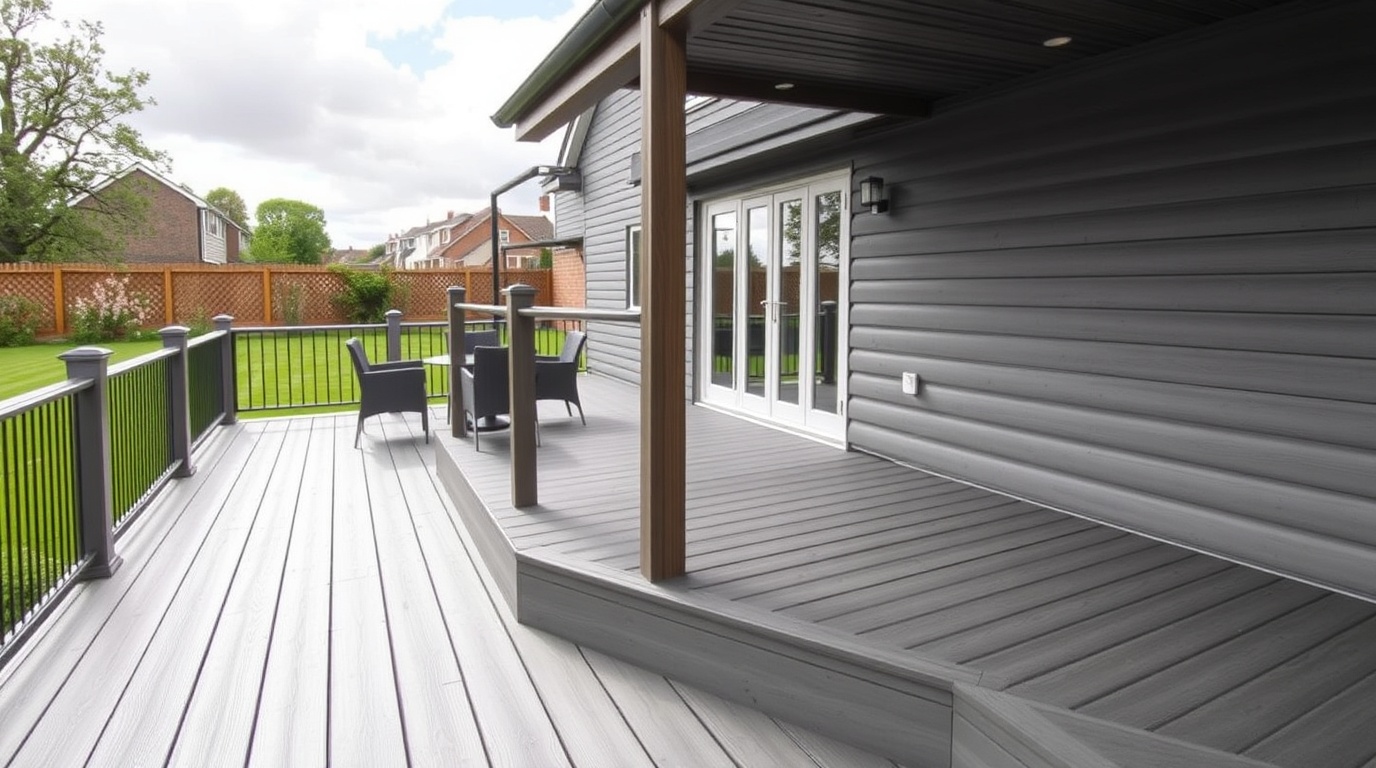
Decking supplied and fitted in the UK typically costs around £100 to £250 per square metre, so a common 15 to 20 m2 deck often falls roughly between £2,000 and £5,000 all in. That all-in figure bundles the boards, subframe, groundworks, fixings, finishing and labour — everything needed to turn an empty patch of garden into a finished deck. It is much higher than a supply-only price for boards alone, because on a fitted deck the labour and subframe usually make up the larger share of the cost. The rate sits lower for ground-level softwood and higher for raised, hardwood or composite decks. Always confirm exactly what a supply-and-fit quote covers before comparing it with another.
Supplied and fitted means the whole job: someone provides the materials and builds the deck. Knowing what that all-in price includes is the key to comparing quotes and to seeing why it dwarfs the cost of the boards.
Supplied-and-fitted decking at a glance
- Typical all-in rangeAround £100–£250 per m2
- Common 15–20 m2 deckRoughly £2,000–£5,000
- Lower endGround-level softwood
- Higher endRaised, hardwood or composite
- Largest shareLabour and subframe
What supplied and fitted includes
A supply-and-fit price is meant to be everything, but it pays to check what each fitter has counted. A complete all-in deck price normally covers:
- Boards: softwood, hardwood or composite, with a cutting and wastage allowance.
- Subframe: the joists and bearers that carry the boards, plus posts and bracing on a raised deck.
- Groundworks: clearing and levelling the area, a weed-control membrane, and foundations such as concrete pads or post anchors.
- Fixings: screws or hidden clips, and corrosion-resistant fixings where needed.
- Finishing: fascia boards, steps, balustrade, skirting and a first treatment on timber.
- Labour: setting out, building the frame, laying the boards and clearing the site.
The figures below are indicative all-in ranges for guidance only, set against a supply-only figure to show the gap.
| Basis | Indicative cost per m2 | Notes |
|---|---|---|
| Supply-only (boards alone) | Around £25–£70 | Boards only, no frame, groundworks or labour |
| Supplied and fitted (softwood) | Around £100–£150 | All-in, ground-level deck |
| Supplied and fitted (composite/hardwood) | Around £150–£250 | All-in, premium boards |
Indicative UK figures for guidance only; obtain itemised quotes for your site. Sources: Checkatrade and MyJobQuote 2026 decking cost guides.
Why supplied and fitted costs far more than the boards
People are often surprised that a fitted deck costs several times the price of the boards from a merchant. The reason is that the boards are the lowest-cost and quickest part of the build. The bulk of the cost and effort sits in the parts you do not buy off a shelf:
- The subframe uses more timber than many expect and must be built square and level, which takes time and skill.
- Groundworks — clearing, levelling and foundations — can be the slowest part on a difficult site and are essential to a deck that lasts.
- Labour covers setting out, framing, boarding and finishing, and on a fitted deck commonly makes up a third to a half of the total.
- Finishing details such as steps, fascias and balustrades add boards and hours that a supply-only price ignores.
So a supply-only price tells you only what the visible surface costs. A supply-and-fit price tells you what a finished, usable deck costs, which is the figure that matters for budgeting.
Reading a supply-and-fit quote
Because supply and fit means the whole job, the quality of the quote matters as much as the number. A good all-in quote is itemised, so you can see what you are paying for and compare fitters on substance. When reading one, check that it is clear on:
- The boards: material, grade and whether the price covers wastage and cutting for borders and curves.
- The subframe: joist size and spacing, and post and bracing detail on a raised deck. This decides how solid the deck feels.
- Foundations and groundworks: what the deck stands on and how the ground is prepared, since this is where a cheap quote often cuts corners.
- Extras: whether steps, balustrade, fascia and lighting are included or quoted separately.
- Waste and tidy-up: whether removing spoil and offcuts is part of the price.
When two supply-and-fit quotes differ sharply, the gap almost always lives in the subframe, groundworks or extras rather than the boards. A higher all-in figure that specifies a proper frame, sound foundations and a full tidy-up is frequently better value than a lower one that leaves those details vague, because the unseen work is what decides whether the deck stays solid for years.
Frequently asked questions
Is it cheaper to supply your own boards and pay for fitting?
Sometimes the board cost is lower if you buy them yourself, but it can complicate the job. Fitters often prefer to supply materials so they control quality and quantity, and so any shortfall or defect is their responsibility. Splitting supply and fit can also blur who is liable if something is wrong, so weigh the saving against the simplicity of an all-in quote.
Why is a fitted deck so much more than the boards cost?
The boards are the lowest-cost, quickest part of the build. Most of a fitted deck's cost is the subframe, groundworks and labour, which a supply-only board price ignores entirely. On a fitted deck, labour alone often makes up a third to a half of the total, which is why the all-in figure is several times the cost of the boards.
What should a supply-and-fit quote include?
It should cover the boards, the subframe, groundworks and foundations, fixings, finishing such as fascias and any steps or balustrade, plus labour and site clearance. Ask for it itemised so you can see each part. If steps, a balustrade or lighting are quoted separately, make sure you know that before comparing quotes.
Sources & further reading
Figures on this page are typical UK ranges drawn from published sources and depend on your specific garden. They are guidance, not a quotation.