The short answer
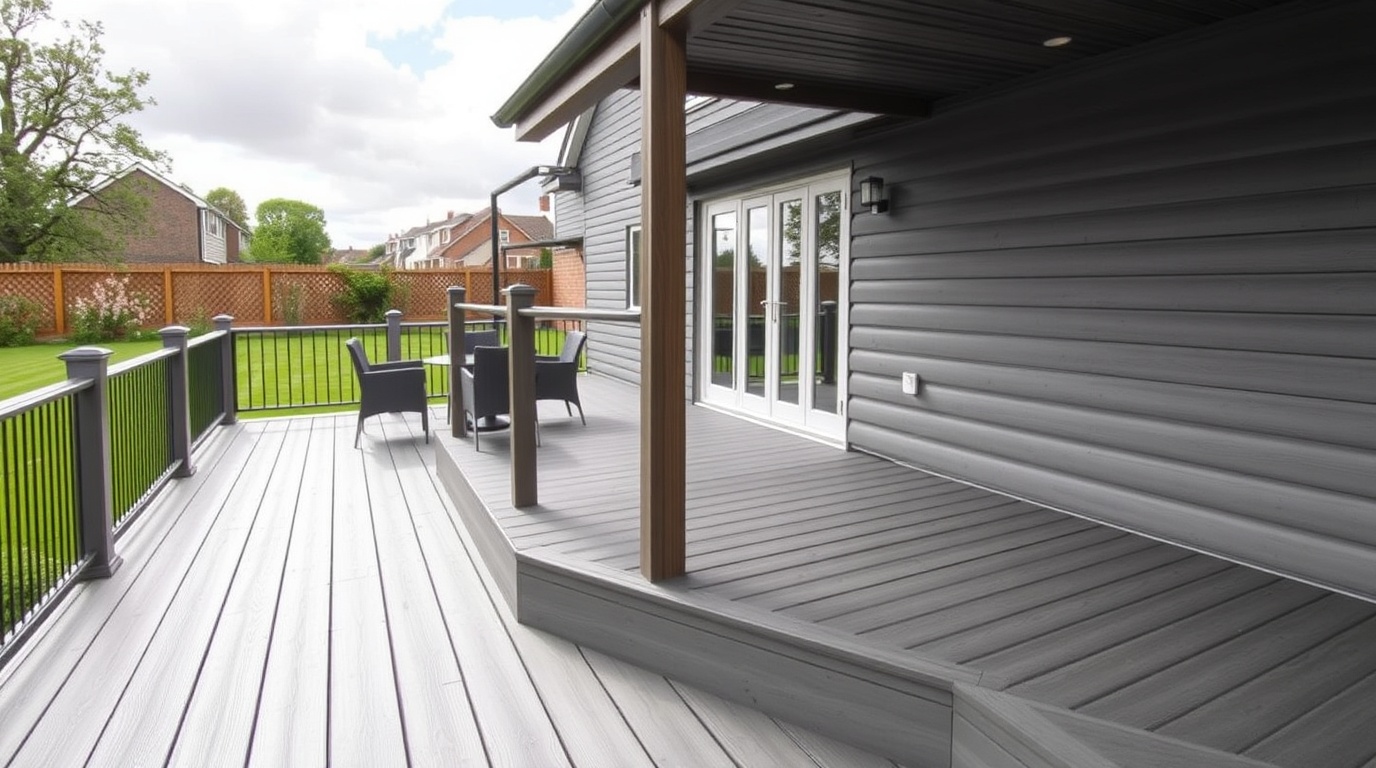
Composite decking can fade a little, but modern capped boards are designed to resist significant fading. It is normal for a new composite deck to lighten slightly in its first few months as the colour settles under UV exposure, then stabilise. Capped composite — boards with a protective polymer outer shell — resists UV fade, staining and weathering much better than older uncapped composite, which is more prone to fade and discolour over time. Many manufacturers offer warranties covering excessive fade beyond a stated limit, often measured over decades. Some discolouration can also come from surface dirt, mould or trapped debris rather than the board fading, and that cleans off.
Composite is sold as low-maintenance and colour-stable, but it is not entirely fade-proof. Here is what is normal, what is not, and how board quality changes the picture.
Composite fade at a glance
- Initial lighteningNormal in first few months
- Capped boardsResist UV fade well
- Uncapped boardsMore prone to fade
- WarrantyOften covers excessive fade
- Surface discolourOften dirt/mould — cleans off
Normal initial colour settling
A degree of colour change in the early life of a composite deck is normal and expected. When a new board is first exposed to sunlight, it commonly lightens slightly over the first few months as the colour settles under UV. After this initial settling period, the colour generally stabilises and stays much more constant for the rest of the deck's life.
This is different from the continuous, ongoing fade that timber and older composites can suffer. Manufacturers usually account for it, and some advise that the colour you see after the first season is closer to the deck's long-term shade than the colour straight out of the packaging. It is worth knowing about so the early lightening is not mistaken for a fault.
Capped versus uncapped composite
How much a composite deck fades depends heavily on whether it is capped or uncapped:
- Capped composite: the board has a protective polymer outer shell (cap) bonded over the wood-plastic core. This cap is engineered to resist UV fade, staining, scratching and moisture, so capped boards hold their colour and appearance far better over time. Most quality modern composite is capped.
- Uncapped composite: older or budget boards without the protective shell are more exposed to UV and moisture, so they are more likely to fade, weather and discolour as the years pass.
If colour stability matters to you, the cap is the feature that delivers it. This is also why a deck's fade resistance is largely set at the point of buying the board, not by later maintenance.
What warranties say about fade
Because some colour change is expected, composite warranties usually address fade specifically. Many manufacturers warrant their boards against excessive fade beyond a stated amount, often measured on a colour scale over a long period (commonly decades for residential use). The point of the limit is to distinguish:
- Normal weathering and the initial settling — not a fault, not covered.
- Excessive fade beyond the warranted threshold — treated as a defect and covered.
Warranty terms vary by brand and range, and they typically require correct installation. The practical takeaways are to check the fade and stain terms before buying, keep proof of purchase, and understand that the early lightening is normal rather than a warranty claim. A long, specific fade warranty is also a useful signal of how colour-stable the manufacturer expects the board to be.
Discolouration that is not really fade — and how to limit it
Not all colour change is the board fading. A deck that looks dull, patchy or darkened is often suffering from surface dirt, mould, algae or trapped debris rather than UV fade, and that cleans off with warm soapy water and a soft brush. Staining from spills, leaf tannins or standing water can also discolour the surface and is best dealt with promptly. So before assuming a board has faded, it is worth giving the deck a thorough clean.
To keep composite looking its best:
- Clean it periodically and clear the gaps so debris and damp do not build up.
- Deal with spills and leaf litter quickly to avoid staining.
- Choose capped composite if long-term colour stability is a priority.
- Follow the manufacturer's care guide for approved cleaning products, avoiding harsh chemicals that could affect the surface.
In short, expect a little settling early on, accept that capped composite resists long-term fade well, and remember that much apparent 'fading' is actually surface dirt that washes away.
Uneven fading and patchy colour
One worry people raise is not overall fade but uneven colour — one area looking lighter or darker than another. There are a few innocent explanations worth checking before concluding a board is faulty:
- Different sun exposure: the part of a deck in full sun settles in colour faster than a shaded section, so during the early settling months the two can look slightly different until the whole deck stabilises.
- Objects left in place: a planter, mat or piece of furniture left on a new deck through its settling period can shade the area beneath, leaving a lighter patch that evens out once it is uncovered and exposed.
- Surface contamination: a darker patch is often dirt, mould or a stain rather than the board, and cleans off.
- Batch or board variation: as a natural-look product containing wood fibres, composite can have slight board-to-board variation, which is normal and usually blends visually across a deck.
For the settling-period patches, moving objects around occasionally during the first season lets the colour even out. For contamination, a clean fixes it. Genuine, permanent, excessive uneven fade is uncommon on quality capped boards and is where the warranty would apply.
Choosing for colour stability and managing expectations
If holding its colour matters to you, the decisions that count are made at the point of buying, not afterwards. Choose capped composite from a reputable range, and read the fade warranty — a long, specific fade-and-stain warranty signals how colour-stable the manufacturer expects the board to be. Some colours and finishes also show settling and any later change more than others; a sample left outdoors for a few weeks gives a realistic idea of how a particular board behaves in your conditions.
It also helps to manage expectations sensibly. Composite is fade-resistant, not fade-proof: a little initial lightening is normal, and capped boards then hold their colour very well for years, but no outdoor surface stays exactly as it left the factory forever. Compared with timber — which greys and fades continuously without regular re-treatment — composite's small initial settle and long-term stability is a strong result for a low-maintenance product. Keep it clean, choose capped, and understand the warranty, and a composite deck will hold a good, consistent colour for the long term.
One last practical tip is worth knowing for the future. If a board ever does need replacing — after accidental damage, say — a brand-new board from the same range may look slightly brighter than the established deck around it, because the existing boards have been through their initial settling and a few years of gentle weathering. This usually evens out as the new board settles and ages to match, and it is another reason to keep a note of the exact board range and colour you bought. It is not fade in the problem sense; it is simply the difference between a fresh board and one that has lived outdoors for a while, and time generally brings the two together.
Frequently asked questions
Is it normal for composite decking to fade at first?
Yes. It is normal for a new composite deck to lighten slightly over its first few months as the colour settles under UV exposure, then stabilise. This initial settling is expected rather than a fault, and the colour after the first season is usually close to the deck's long-term shade.
Does capped composite decking fade less than uncapped?
Yes. Capped composite has a protective polymer outer shell that resists UV fade, staining and moisture, so it holds its colour much better over time. Uncapped boards lack that shell and are more prone to fading and discolouring. If colour stability matters, capped composite is the more fade-resistant choice.
My composite decking looks discoloured — is it faded?
Not necessarily. Dull, patchy or darkened decking is often surface dirt, mould, algae or staining rather than the board fading, and it usually cleans off with warm soapy water and a soft brush. Clean the deck thoroughly first; if a genuine excessive fade remains, check the manufacturer's fade warranty terms.
Sources & further reading
- Trex — composite decking fade, stain and warranty information
- Checkatrade — composite decking care and cost guide
- RHS — paths, patios and decking
Figures on this page are typical UK ranges drawn from published sources and depend on your specific garden. They are guidance, not a quotation.