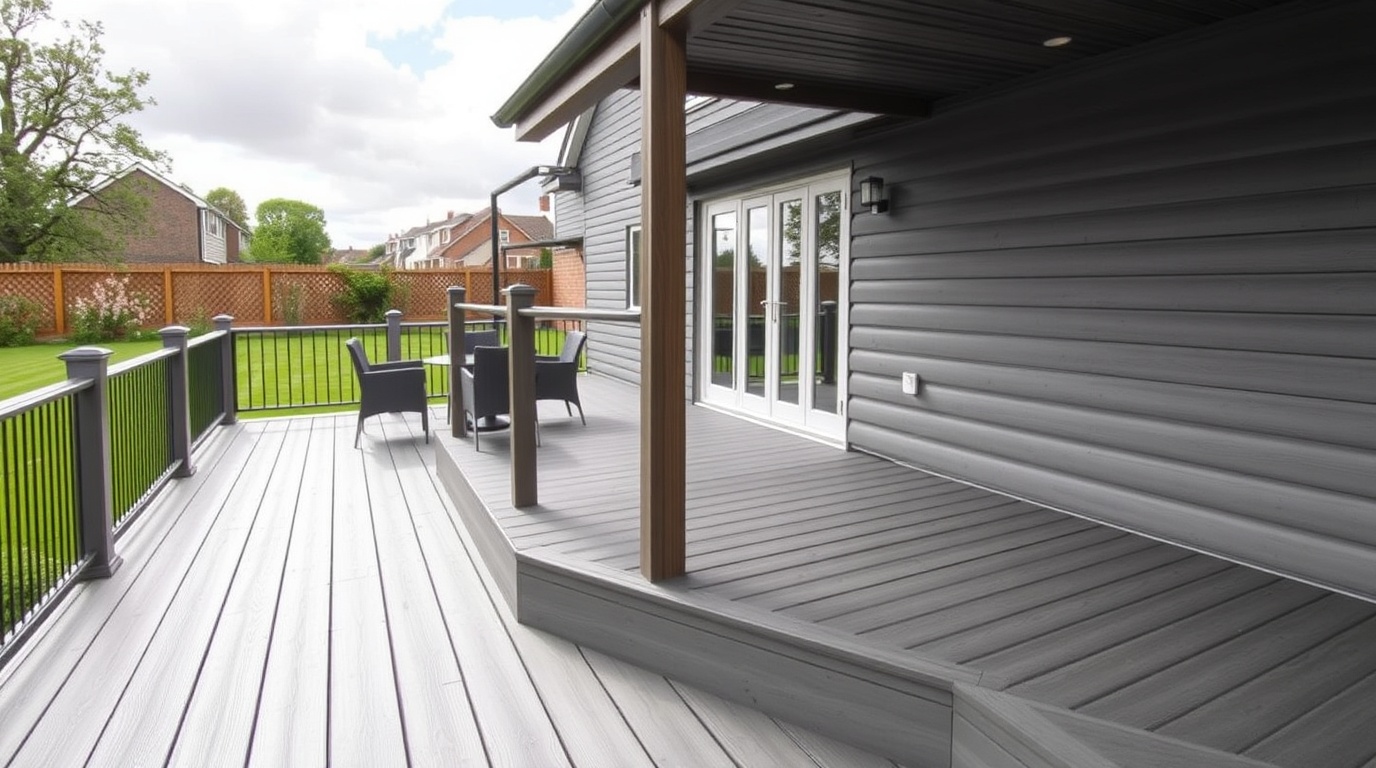
The short answer
Choose decking by ranking your priorities and matching a material to them. Decide first between composite (low maintenance, longer life, higher upfront cost) and timber (lower cost, natural look, needs regular upkeep), then weigh budget, maintenance you'll accept, slip resistance, colour and how the deck suits your site. Sloping or raised gardens favour decking over paving; damp, shaded plots favour low-absorption, grippy boards. Order samples and see colours in real garden light before committing, and remember the sub-frame and installation matter as much as the board. There's no universal best — the right decking is whichever scores highest on the priorities that matter most for your garden and how you'll use it.
Choosing decking is easier when you work through it in order rather than starting from a board you liked the look of. This page gives a simple, practical method for a UK garden.
Quick decision guide
- Lowest upkeepComposite
- Lowest upfront costSoftwood timber
- Most natural lookHardwood timber
- Damp, shaded plotCapped composite, grooved
- Bare feet / kidsComposite (no splinters)
Step 1: rank what matters to you
The right decking follows from your priorities, so list and rank them first:
- Budget — the total you can spend on boards, sub-frame and fitting.
- Maintenance — fit-and-forget, or happy to clean and oil each year?
- Looks — genuine natural grain, or a uniform, consistent finish?
- Durability — how long you want it to last before replacement.
- Safety — slip resistance, especially in shade or near a pool or steps.
- Use — light seating, heavy furniture, a hot tub, children, pets.
Once these are ranked for your garden, the field narrows quickly and the rest of the choices fall into place.
Step 2: composite or timber?
This is the big fork. Composite (recycled wood fibre and plastic) costs more upfront but needs only an occasional wash, won't splinter, resists rot and typically lasts 20–30 years — it suits people who dislike garden chores and want the deck to keep its looks. Timber is cheaper to lay and gives a genuinely natural look, but needs regular cleaning and oiling or staining and lasts 10–20 years for softwood, longer for hardwood. Within timber, softwood is the budget option and hardwood the premium, longer-lasting one. If your top priority is low maintenance, lean composite; if it's low upfront cost or natural wood you'll maintain, lean timber. This single decision shapes most of what follows.
A quick way to match material to priority
The table maps common priorities to a sensible starting choice. Treat costs as broad supplied ranges.
| Top priority | Lean towards | Indicative cost/m² supplied |
|---|---|---|
| Lowest upkeep | Capped composite | £45–£90+ |
| Lowest upfront cost | Softwood timber | £15–£35 |
| Natural look, long life | Hardwood timber | £40–£100+ |
| No splinters / kids | Composite | £40–£90+ |
| Slip safety in shade | Grooved/anti-slip composite | £45–£90+ |
| Re-colour later | Timber (takes stain) | £15–£100+ |
Indicative supplied ranges for guidance only. Sources: Checkatrade and HomeOwners Alliance decking cost guides.
Step 3: read your site
The garden itself constrains the choice. On a slope, bank or raised area, decking on a sub-frame is usually easier and cheaper than levelling for paving, and lets you build out level with a doorway. In a damp or heavily shaded plot, choose low-absorption capped composite with a textured or grooved surface to limit algae and keep grip, since shade is where slip and mould problems start. Check the levels at the house: any deck must sit at least 150mm below the damp-proof course so rain can't bridge into the wall. Consider sun too — dark composite can get warm in a south-facing garden, so lighter tones help. And think about access and the void beneath: the sub-frame needs ventilation and drainage, and a raised deck's underside should be screened against pests. Matching the board to these site realities prevents most regrets.
Step 4: choose colour, finish and grip
With the material and site settled, the finishing choices are about looks and safety. Colour: composite ranges span pale greys and tans through to deep browns and charcoal; timber can be left to silver or stained to a colour. Always order samples and view them outdoors in your own light over a few days, because boards look different in a garden than on a screen, and lighter shades show less heat build-up and less obvious dust. Finish and grip: grooved or embossed boards and dedicated anti-slip ranges add traction, which matters in shade, near steps or by water; a smooth board can look cleaner but offers less grip. Decide whether you want grooved or smooth, and check the board's stated slip rating if safety is a concern. These choices don't change the structure, so you can refine them once the bigger decisions are made.
Step 5: don't skimp on the sub-frame and fitting
The board you stand on is only half the deck. A sound sub-frame — correctly sized and spaced joists, treated timber or aluminium, firm supports, proper falls and drainage, and good ventilation beneath — decides how flat, stable and long-lasting the finished deck is. A premium board on a weak frame will move, sag or trap damp; a modest board on a well-built frame performs far better. When comparing quotes, look past the headline board price to the quality of the structure and the installer's competence, and check that fixings and board gaps follow the manufacturer's spec. Getting the unseen parts right is what turns a good board choice into a deck you're happy with for years.
Step 6: think about size, shape and how you'll use it
Before settling the order, picture how the deck will actually work. Size it to the furniture and activity you have in mind — a dining set, loungers, a hot tub or just a couple of chairs all need different footprints, and it's easy to build a deck that looks generous empty but feels cramped once furnished. Consider where the sun falls through the day, so the main seating area catches it (or avoids it, if you want shade), and how the deck connects to the house and garden — level with the back doors, stepping down to a lawn, or as a destination at the far end. Think about steps, edges and any railings, which affect both safety and cost, and whether you want built-in features like benches, planters or lighting. Mapping the layout and use first means the material, colour and finish choices serve a deck that genuinely suits how you'll live in the garden, rather than a shape chosen for its own sake.
Bringing it together
Choosing decking well is mostly about order and honesty: rank your priorities, settle composite versus timber, read your site, then refine colour, finish and grip, and finally invest in a sound sub-frame and a competent installer. At each step, be honest about the things that are easy to gloss over — how much maintenance you'll really do, how shaded and damp the spot is, how the deck connects to the house, and what you can genuinely afford across boards, frame and fitting. There's no single right deck, only the one that scores highest on your priorities for your garden. Order samples, get itemised quotes that separate the sub-frame from the boards, and check any planning position before you start. Work through it in that order and the decision becomes clear rather than overwhelming.
Frequently asked questions
What's the most important factor when choosing decking?
There isn't a single one — it depends on your ranked priorities. For most people the first real decision is composite versus timber, which trades upfront cost against maintenance and lifespan. After that, site conditions like slope, shade and the house levels, plus your budget and how you'll use the deck, shape the rest of the choice.
Is composite or timber decking the right choice for me?
Choose composite if low maintenance and a long, splinter-free life matter most and you can stretch the budget. Choose timber if a lower upfront cost or a genuinely natural look matters more and you'll maintain it. Softwood is the budget timber option; hardwood the premium, longer-lasting one.
Do I need planning permission for decking?
Often not — decking is usually permitted development on a typical house. However, a raised platform, decking more than about 300mm above ground, or one covering a large share of the garden can require planning permission, and listed buildings and conservation areas have extra rules. Always check with your local authority before building.
Sources & further reading
Figures on this page are typical UK ranges drawn from published sources and depend on your specific garden. They are guidance, not a quotation.