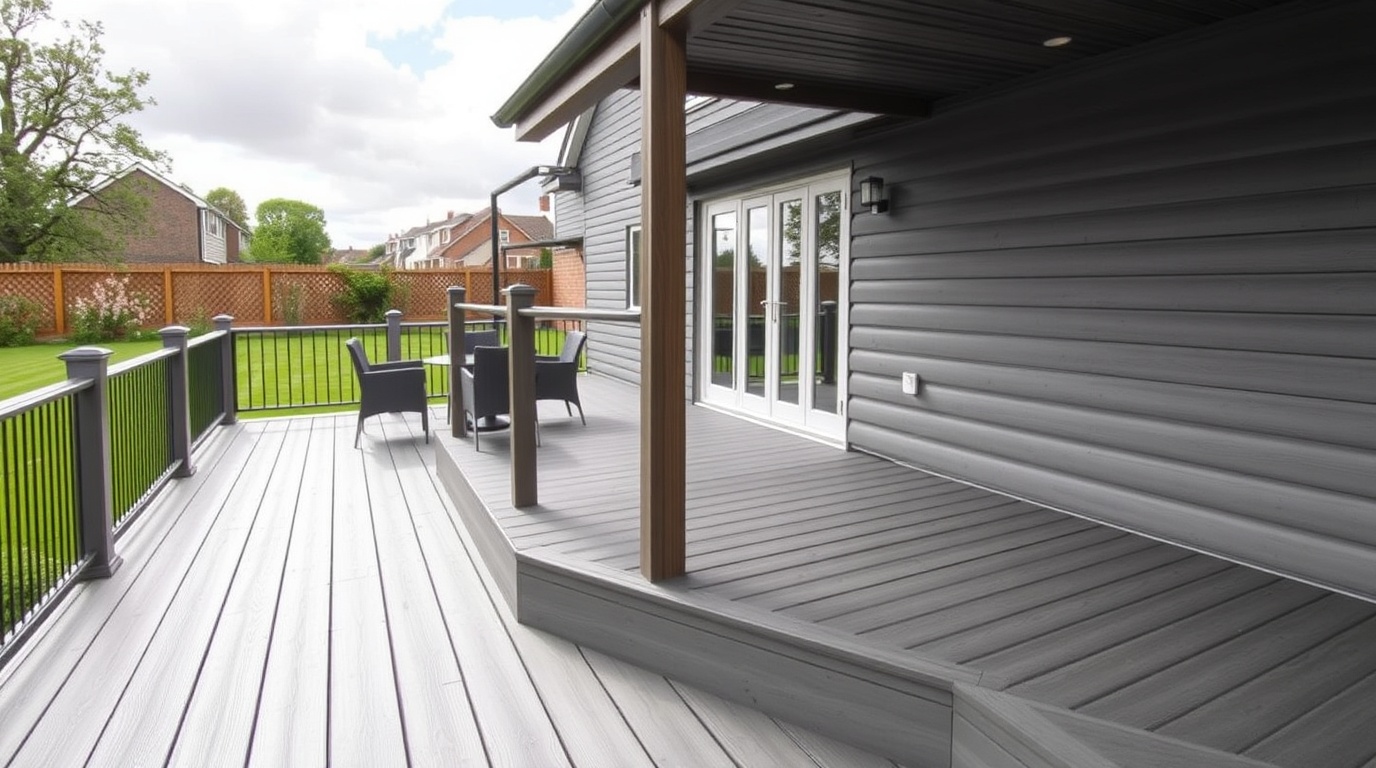
The short answer
A raised deck costs noticeably more than a ground-level one, commonly around £150 to £350 per square metre supplied and fitted, because lifting the deck adds deeper foundations, taller posts, more bracing, steps and a balustrade. A raised deck of 15 to 20 m2 often runs into the thousands, with the figure rising sharply on tall or sloping sites. The extra cost is mostly structural and safety work, not the boards. Once a deck sits more than 30cm above ground, planning permission may be needed, and a raised deck people can fall from generally needs a balustrade and may bring building regulations into play for structure and guarding. Always confirm the height, foundations and guarding in the quote.
Raising a deck turns a simple platform into a small raised structure, and the price reflects that. The boards barely change; the foundations, framing and safety features are where the extra cost lives.
Raised decking cost at a glance
- Typical supply-and-fit rangeAround £150–£350 per m2
- Main extra costsFoundations, posts, steps, balustrade
- Planning triggerOften above 30cm high
- Safety featureBalustrade where people could fall
- Cost rises withHeight and slope of the site
Why raised decking costs more
A ground-level deck sits just above the soil on a shallow frame. A raised deck has to carry its load up onto posts, which changes the whole build and adds several cost lines that a low deck does not have:
- Foundations: taller decks need stronger, deeper foundations — concrete pads or footings — to keep the posts stable and stop the deck settling or leaning.
- Posts and bracing: the deck stands on posts that must be braced against sway. The higher the deck, the more bracing and the larger the timbers.
- Steps: a raised deck needs steps to reach it, sometimes a full flight, which is extra framing, boards and labour.
- Balustrade: guarding around the edge to stop people falling. This runs around much of the perimeter and is a significant material and labour cost.
- Skirting: many raised decks are finished with skirting or lattice around the open underside, adding boards and time.
None of this is the deck surface itself, which is why a raised deck costs well above a ground-level one of the same area. The figures below are indicative for guidance only.
| Deck height | Indicative cost per m2 (supplied and fitted) | Notes |
|---|---|---|
| Ground level | Around £100–£250 | Shallow frame, no balustrade needed |
| Low raised (steps, low balustrade) | Around £150–£300 | Foundations, short steps, guarding |
| Fully raised / raised | Around £200–£350 | Tall posts, bracing, full balustrade and steps |
Indicative UK figures for guidance only; raised decks vary widely with height and site. Sources: Checkatrade and MyJobQuote 2026 decking cost guides.
Rules that apply to raised decks
Height is not only a cost factor; it can change the rules that apply to your deck. The two areas to be aware of are planning permission and building regulations, and a raised deck is more likely to engage both than a low one.
On planning, decking is often allowed under permitted development, but there are limits. A deck more than 30cm above ground level, or one that combined with other structures covers more than half the garden, can need planning permission. Listed buildings and conservation areas have tighter rules. Checking with your local planning authority before building avoids a costly retrofit.
On building regulations, the structure of a raised deck and the guarding around it matter for safety. A platform people could fall from generally needs a balustrade of adequate height with appropriately spaced infill so a child cannot slip or climb through. Steps need a safe rise and going. Where a deck is high or attached to the house, the structural design and guarding may need to meet building regulations, so it is worth confirming with your local authority building control whether they apply to your project.
Getting a sound, fair quote
Because so much of a raised deck's cost is hidden in the structure, the most useful quote is an itemised one that spells out how the deck is supported and guarded. When comparing quotes for a raised deck, look for clear answers on:
- Foundations: what the posts stand on — concrete pads or footings — and how deep, since a tall deck on shallow foundations is a recipe for movement.
- Post and joist sizes: larger timbers and proper bracing are what keep a raised deck rigid rather than swaying.
- Balustrade: its height and infill spacing, which is a safety matter, not a style choice, on a deck people can fall from.
- Steps: how many and how they are built, since a full flight adds meaningful cost.
- Compliance: whether the fitter has checked planning and building regulations for the height and position of your deck.
A quote that is vague on the foundations and guarding is the one to question. On a raised deck, the unseen structure and the safety features are not extras to trim — they are the parts that make the deck safe to stand on, so a slightly higher figure that specifies them properly is usually the sounder choice.
Frequently asked questions
Does raised decking need planning permission?
It can. Decking is often permitted development, but a deck more than 30cm above ground level, or one that takes the total of decking and extensions over half the garden, may need planning permission. Conservation areas and listed buildings have stricter rules, so check with your local planning authority before building a raised deck.
Why is a raised deck so much more expensive than a ground-level one?
The extra cost is in the structure and safety, not the boards. A raised deck needs deeper foundations, taller posts with bracing, steps to reach it and a balustrade around the edge. These add a lot of material and labour that a low deck sitting near the ground simply does not require.
Does a raised deck need a balustrade?
A deck high enough that someone could fall and be injured generally needs guarding such as a balustrade, with a safe height and infill spaced so a child cannot slip or climb through. The exact requirement depends on the height and whether building regulations apply, so confirm with building control for your project.
Sources & further reading
Figures on this page are typical UK ranges drawn from published sources and depend on your specific garden. They are guidance, not a quotation.