The short answer
UK decking falls into five main types. Softwood timber (pressure-treated pine or larch) is the lowest-cost and most common, needing regular upkeep. Hardwood timber (oak, balau, iroko, ipe) is denser, more durable and longer-lasting but pricier. Composite decking (recycled wood fibre and plastic) is low-maintenance and long-lived, costing more upfront. PVC or plastic decking is fully synthetic, very light and rot-proof, with a less natural look. Aluminium decking is a niche, very durable, non-combustible option used mainly on balconies and fire-sensitive structures. Most domestic gardens choose between softwood, hardwood and composite, with the right pick depending on budget, maintenance and looks.
Walk into any UK merchant and you'll find several distinct decking materials, not just wood. This page explains the main types and how they differ, so you know what's on the table.
The main types
- Lowest cost, most commonSoftwood timber
- Most durable timberHardwood
- Lowest maintenanceComposite
- Fully syntheticPVC / plastic
- Non-combustibleAluminium
The five main families
Decking sold in the UK divides into five broad types:
- Softwood timber — fast-grown conifer (pine, larch, spruce), usually pressure-treated. The budget mainstream.
- Hardwood timber — slow-grown broadleaf (oak, balau, iroko, ipe). Denser, naturally durable, premium.
- Composite — a moulded blend of recycled wood fibre and plastic, capped or uncapped. Low-maintenance.
- PVC / plastic — fully synthetic boards with no wood content. Very light and rot-proof.
- Aluminium — metal decking, non-combustible and extremely durable. Mainly balconies and roofs.
Within each family there's variety — board widths, grooved or smooth surfaces, hollow or solid composite, and many colours — but these five cover what's available.
Timber: softwood and hardwood
Real wood is still the most common decking in the UK. Softwood is the default budget choice: cheap, widely stocked and easy to fit, but it relies on pressure-treatment and regular oiling or staining to survive, and typically lasts 10–20 years. It's ideal when cost is the priority and you'll maintain it. Hardwood sits at the premium end: oak, balau, iroko and ipe are denser, naturally resistant to rot and insects, finer-grained and longer-lasting (25 years or more), but they cost considerably more and are heavier to install. Both share timber's appeal — genuine grain and warmth, the ability to re-stain, and easy board replacement — and both share its downside of needing maintenance to look their best in the damp UK climate.
How the types compare
The table is a broad guide. Treat costs as supplied board ranges that vary with product, grade and supplier.
| Type | Maintenance | Typical lifespan | Indicative cost/m² supplied |
|---|---|---|---|
| Softwood timber | Regular oil/stain | 10–20 years | £15–£35 |
| Hardwood timber | Periodic oil | 25+ years | £40–£100+ |
| Composite | Occasional wash | 20–30 years | £40–£90+ |
| PVC / plastic | Occasional wash | 20–30 years | £40–£90+ |
| Aluminium | Very low | Decades | £90–£200+ |
Indicative supplied ranges for guidance only. Sources: Checkatrade and HomeOwners Alliance decking cost guides.
Composite and PVC: the low-maintenance options
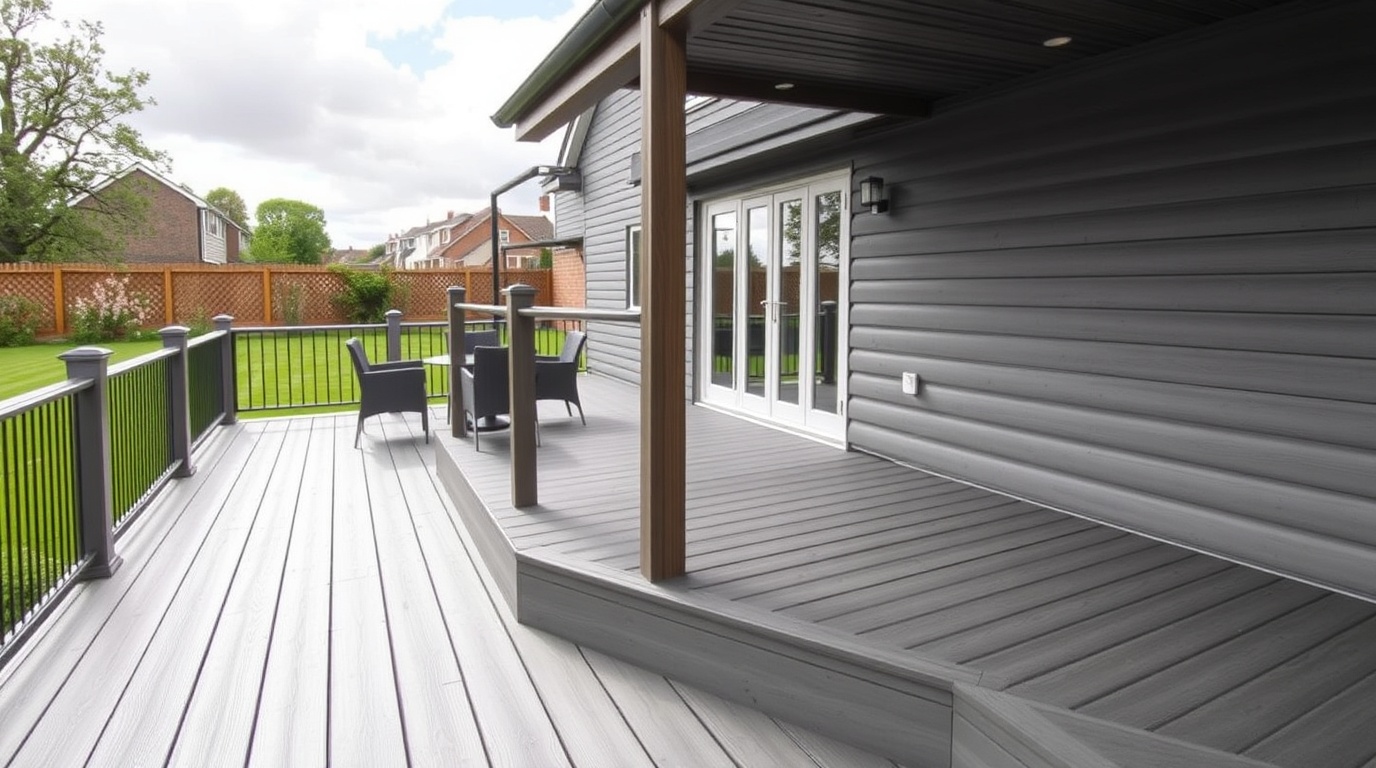
The synthetic and semi-synthetic types have grown fast because they remove timber's upkeep. Composite mixes recycled wood fibre with plastic, giving a board that looks wood-like but resists rot, insects, splinters and fading — it needs only an occasional wash and lasts 20–30 years. Most quality composite today is capped, with a protective polymer shell that improves stain and fade resistance. PVC or plastic decking goes further, with no wood content at all: it's very light, completely rot-proof and low-maintenance, but the look is generally less convincing than good composite and it can feel more synthetic underfoot. Both can get warm in strong sun, especially in dark colours, and both rely on correct installation gaps to manage thermal movement. For gardens where low maintenance matters most, these are the leading choices.
Aluminium and other niche options
Aluminium decking is the specialist of the group. It's a metal board system that's non-combustible, extremely durable and rot-proof, which makes it the go-to for balconies, roof terraces and fire-sensitive structures where timber and combustible composite may not be permitted. It's the most expensive type and has a distinctly engineered look, so it's rare in ordinary domestic gardens but valuable where fire performance or a very long, maintenance-free life is the priority. You may also come across bamboo decking, a dense, durable wood-alternative, and co-extruded composite variants marketed under brand names. These are niche relative to the big three, but worth knowing exist. For most gardens, though, the practical decision remains softwood, hardwood or composite.
How the types differ in look and feel
The five types don't just differ on paper — they look and feel distinct underfoot. Softwood has the open, knotty grain of fast-grown conifer and a lighter weight, taking stain readily but silvering quickly if left. Hardwood reads as a richer, denser, finer-grained timber with real depth of colour, and feels notably more solid and heavier to walk on and to fit. Composite aims to imitate timber with an embossed grain and multi-tonal colour; convincing from a short distance, it reads as a manufactured board close up, and feels uniform and slightly warmer in sun. PVC is the most obviously synthetic, lightest and most plastic-feeling, with the least natural grain. Aluminium looks frankly engineered — flat, precise and metallic — which suits modern balconies but rarely a planted garden. If the genuine character of wood is what you're after, timber still leads; if a consistent, low-fuss surface matters more, composite is the closest wood-effect compromise.
Which type fits which project
A quick way to map type to project: choose softwood for the lowest cost when you'll maintain it; hardwood for a premium, long-lasting natural deck; composite for low maintenance and longevity with a wood-effect finish; PVC where you want the lightest, fully rot-proof option and don't mind a more synthetic look; and aluminium for balconies, roofs or anywhere fire performance and extreme durability matter. Whatever the type, the sub-frame and installation are critical — good ventilation, drainage, correct gaps and a sound structure decide how well any board performs. Knowing the five families lets you shortlist sensibly before getting into colours, finishes and brands. A useful final filter is to weigh the three things that pull against each other for every type — upfront cost, ongoing maintenance and how natural it looks — and decide which of those you're least willing to compromise on, because that single priority usually points clearly to one of the five families and saves a lot of second-guessing later.
Frequently asked questions
What is the most popular type of decking in the UK?
Pressure-treated softwood timber has long been the most common because it's the lowest-cost and most widely available, but composite decking has grown rapidly thanks to its low maintenance and long life. Many new domestic decks now use composite, while softwood remains the budget mainstream and hardwood the premium natural choice.
Is plastic decking the same as composite decking?
No. Composite is a blend of recycled wood fibre and plastic, giving a more wood-like look and feel, while pure PVC or plastic decking has no wood content at all and is fully synthetic. Plastic is lighter and completely rot-proof but generally looks and feels less natural than good capped composite.
What decking is best for a balcony?
Aluminium decking is often specified for balconies and roof terraces because it's non-combustible, very lightweight and extremely durable, which suits fire-sensitive and weight-limited structures. Composite and timber are also used on balconies, but fire regulations on flats and taller buildings can favour non-combustible aluminium — always check the rules for the building.
Sources & further reading
Figures on this page are typical UK ranges drawn from published sources and depend on your specific garden. They are guidance, not a quotation.